
10 Questions to Pressure-Test Your Customer Value Proposition in 2026

INSIGHT - HELEN BLAKE
10 Questions to Pressure-Test Your Customer Value Proposition in 2026
Uncertainty makes us freeze. Behavioural science shows us when the path ahead is unclear, our instinct is do nothing—keep our heads down and wait.
In business, that instinct can be costly.
In a market reshaped by relentless competition and changing buyer expectations, "keep calm and carry on" is a losing strategy. Sitting still doesn't protect your position—it erodes it. The companies pulling ahead are the ones sharpening the one thing that decides whether buyers choose them or a competitor.
That thing is your value proposition.
Here are 10 questions to help you find out whether yours is fit for today's market—or quietly holding you back.
Why your value proposition needs a check-up
These questions aren't a quiz. They're a diagnostic. Answer them honestly and you'll quickly see where your value proposition is strong, where it's weak, and where to focus—on your customers, your people, your culture, or your products and services.
Here's the test: if you can't answer a question in specific, evidenced detail, that's exactly where your value proposition needs work.
1. What do your customers actually value—and what could they live without?
You need clarity on both. Know the reasons customers keep coming back and be equally honest about the things they'd happily do without.
Some of these are functional (features, pricing, delivery). Others are emotional—trust, responsiveness, the feeling that you genuinely understand their business. Every customer carries an implicit hierarchy of why they buy from you. Uncovering that hierarchy and making it explicit is the foundation of a strong value proposition.
2. Are sales slowing—and do you honestly know why?
Plenty of businesses are turning their fortunes around right now, even in a tough market. The common thread isn't clever marketing or louder, wider promotion. It's a value proposition rebuilt on truth, authenticity and real customer value—not hype. If sales are softening, resist the urge to guess. Find out, speak to your customers, ask them – after all they have a vested interest in your success.
3. Are you always chasing new business?
If you constantly hunt new customers? brands? but struggle to win repeat business, something is wrong upstream. Maybe your offering is poorly packaged. Maybe your sales incentives reward new wins and ignore retention. Either way, permanently chasing new customers is one of the most expensive ways to grow. Fix the leak before you turn up the tap.
4. Who exactly are you targeting? Have your buyers changed?
Vague targeting produces vague results. Be precise:
Geography – which countries are you in, and which do you want to enter?
Sectors and sub-sectors – where will you focus in each market?
Buyers and influencers – who are they, by role and job title?
Stakeholder map – who holds the power, and who influences the decision?
Then check that your offering genuinely matches each of those profiles.
5. What risks do those customers see in choosing you?
Every buyer weighs risk and if you understand theirs, you can mitigate it. Smaller firms are often perceived as too small to be safe. Larger firms can lack proof in a specific sector. Naming the perceived risk is the first step to overcoming it. This takes honesty, insight and real research.
6. What pain do you actually relieve?
This is a selling basic, and yet companies still get it wrong. It's easy to describe what you do and list your benefits. It's much harder—and far more valuable—to stand in your customer's shoes and articulate the specific business problem you resolve. If you can't do that clearly, you have a research gap, not a messaging problem.
7. What do you offer that relieves that pain and delivers measurable value?
Can you describe your offerings in detail and explain how they fit together into a tailored solution? Can you quantify the impact—time saved, costs cut, revenue gained, productivity improved? If not, spend more time with your customers understanding how your work actually makes a tangible difference for them.
8. How are you genuinely different from your competition?
Do you know who your real competitors are—including the substitutes, workarounds and AI-driven disruptors your buyers now consider? Where do you have parity, and where do you truly differ? And crucially, how does that difference translate into value the customer can feel?
If your answer feels out of date, it probably is. Markets are being reshaped faster than ever. Refresh your competitive picture.
9. What proof backs up your claims?
Buyers are sceptical, and rightly so. Support every value claim with evidence:
Case studies and named customer testimonials
ROI or total-cost-of-ownership models
Co-authored articles and independent research
A shortage of proof doesn't just weaken your pitch—it lengthens your sales cycle and stalls buyers mid-decision. Strong evidence de-risks the buying journey and keeps deals moving.
10. Are your value stories consistent everywhere—inside and out?
Today buyers do about 70% of their research and decision-making before they ever speak to a salesperson (Gartner). That means your brand can no longer be a promotional add-on disconnected from the sales process. Customers expect a coherent, credible experience at every touchpoint.
That includes your people. Every employee shapes the customer experience—the way they speak, respond and deliver either reinforces your value or undermines it. Great external messaging layered across channels means nothing if the lived customer experience contradicts it.
The bottom line: value is defined by the customer, not by you
Notice that none of these 10 questions outranks the others—they're interconnected. If your answers came with a "dither factor" (be honest), it's time to reassess how you create and deliver value.
Value, like beauty, is contextual. It rests on rational factors—price, speed, reliability—but also on emotional ones: Can I trust them? Will they let me down? How will this make me look? Most buyers don't acknowledge how much emotion drives their decisions. Which is exactly why simply asking customers what they want rarely gives you the full answer.
A renewed value proposition brings clarity, focus and simplicity to what you do, how you think about your business, and how you show up for customers. For over 20 years Futurecurve has been helping clients align their customer value in a dynamic and changing marketplace with these results:
Two client examples of what they achieved based on our work:
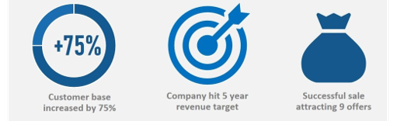
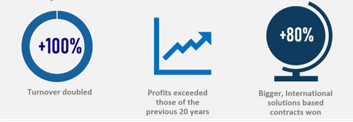
No more heads in the sand. No more hesitation. Get closer to your customers, sharpen your value, and pull ahead in a demanding market. If you want a structured way to achieve your desired results explore our Value Proposition Builder™ and call us for a step-by-step review to defining and delivering your real customer value. Check out our Case studies: https://futurecurve.com/clients.