
How do B2B customers judge value?

INSIGHT - HELEN BLAKE
Our last blog, 'Getting the balance right between rational and emotional value', sparked some really interesting conversations with clients.
The consistent theme? B2B customers judge the value they receive from providers primarily by the outcomes they actually realise.
But here's the thing — as customers, we don't experience value as outcomes alone. We experience it as outcomes minus the effort, risk, and friction it took to get there.
Put simply:
Perceived Value = Business Outcomes − (Cost + Time + Effort + Risk)
Providers tend to think: "We delivered the product" or "We gave the customer access to the platform." Meanwhile, the customer is thinking: "Yes, but how hard did we have to work to get any value from it?"
At Futurecurve, we call this the Value Gap. It is especially pronounced when customers are expected to self-serve throughout the engagement process.
Why self-service changes the value equation
Self-service isn't inherently a bad thing — plenty of us prefer it for the speed, control, and efficiency it offers. But it starts to erode perceived value when it shifts too much of the burden onto the customer.
Think about situations like:
Troubleshooting problems without adequate support
Having to figure out the workflow yourselves
Manually stitching together internal alignment
Carrying the implementation load
Spending more time learning the provider's system than solving your own business problem
There's nothing more frustrating that feeling like unpaid labour — and wondering whether you should be sending them an invoice.
A provider can have a genuinely strong product and still score poorly if the customer walks away thinking:
"It works, but adoption was a nightmare."
"The ROI is there, but only because our team worked around the vendor."
"We bought expertise and got a tool."
"We were promised outcomes and left to assemble them ourselves."
"We wanted a packaged solution and got a bespoke build instead."
Product value versus outcome value
This is a tension we see regularly when working with clients on their customer value propositions. Sales and operational teams tend to define value in terms of what they deliver. Customers, on the other hand, define value by what actually changed for them.
See the comparison:
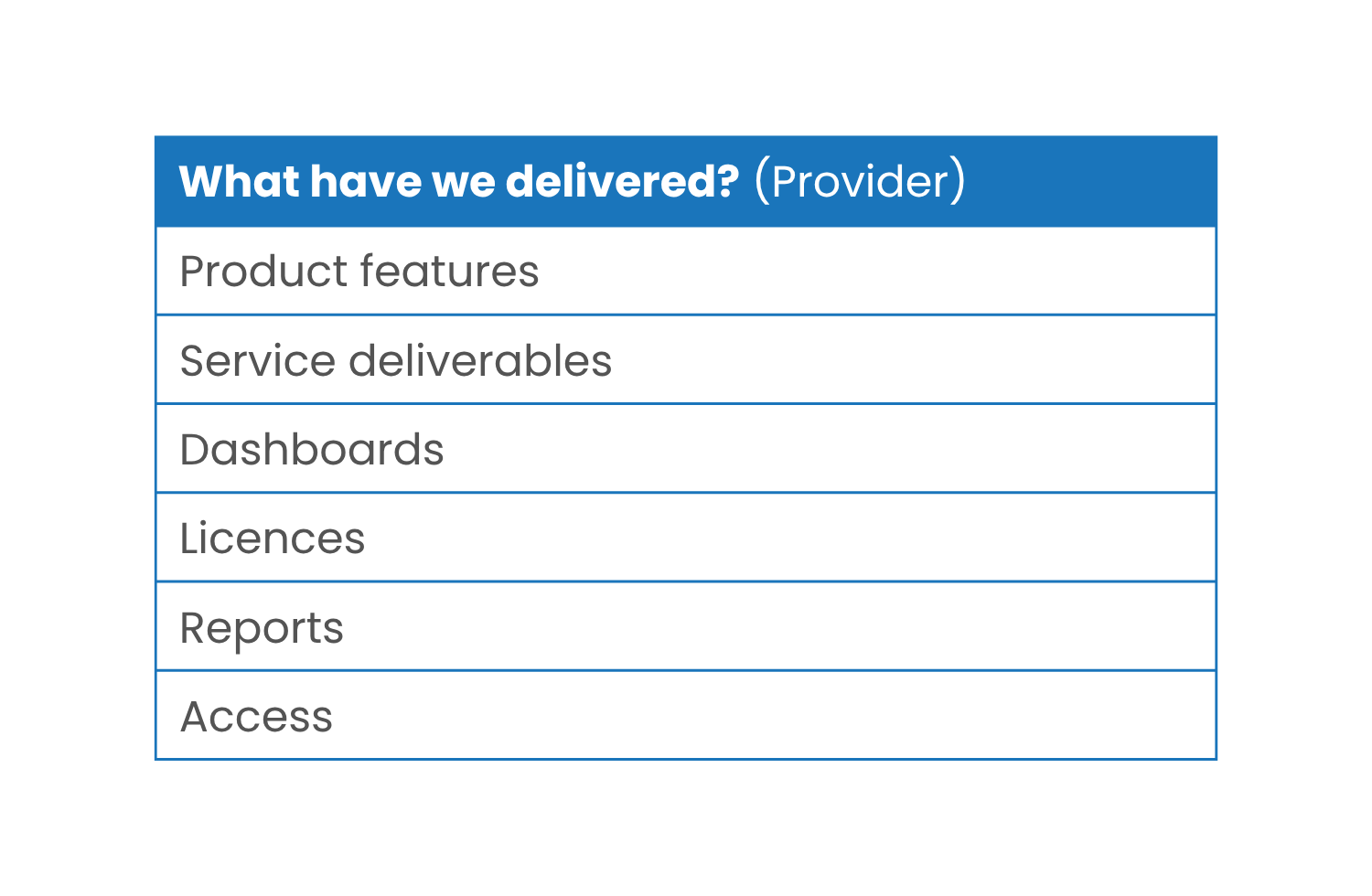
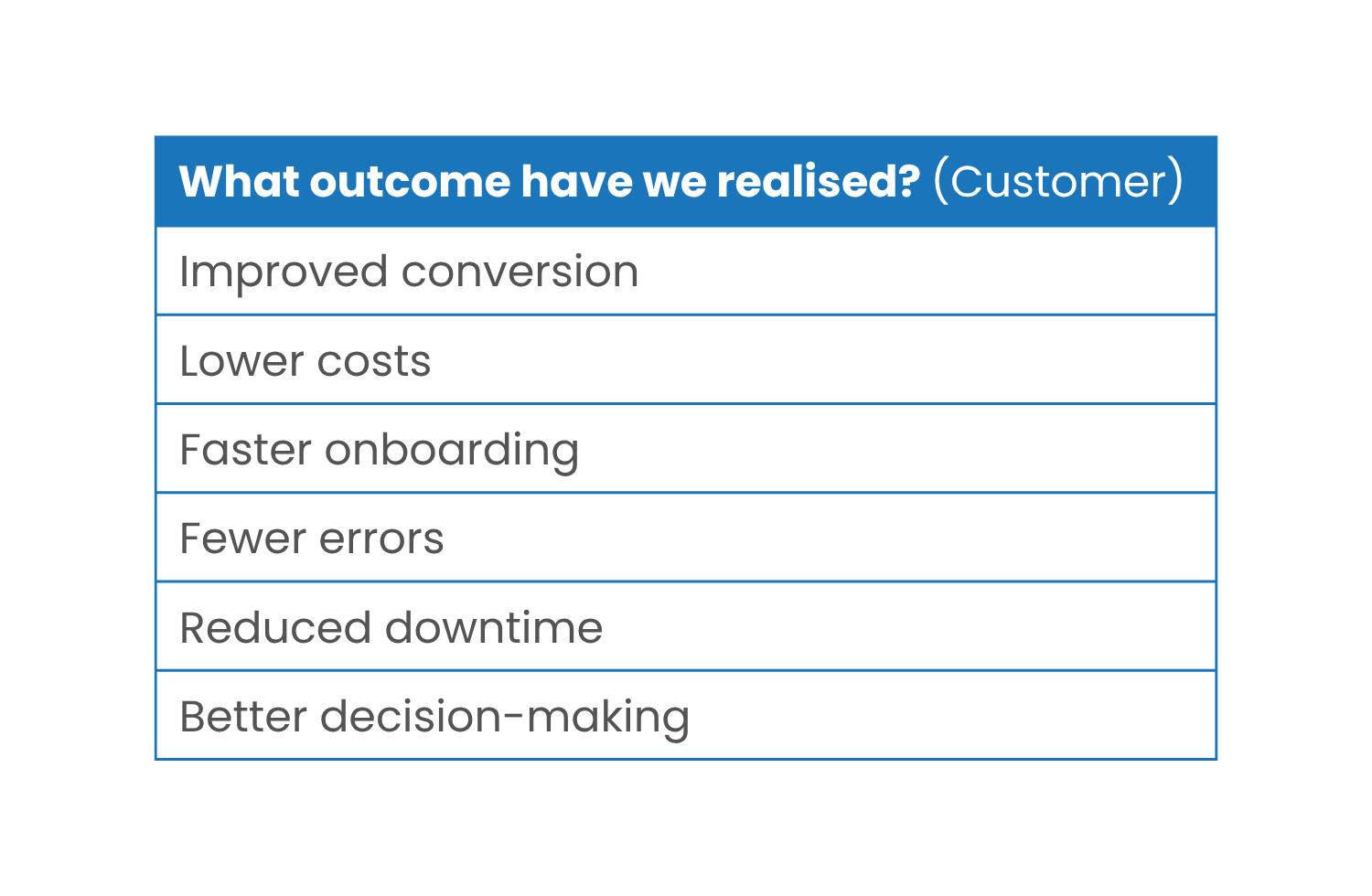
Closing the Value Gap really matters.
A product or service is only as valuable as the outcome it helps the customer achieve. If getting to that outcome requires significant customer effort, the perceived value gets mentally discounted.
We've all been there: how many times have you abandoned a purchase because it was taking too long or felt unnecessarily complicated?
The questions buyers are really asking
When assessing value, most B2B buyers are working through some version of these questions and serves as a useful checklist to help us close the value gap:
Commercial value Was the spend justified by the results?
Operational value Did this save time, reduce complexity, or improve how we work?
Strategic value Did this help us hit an important business objective?
Relationship value Does this provider help us think, adapt, and solve problems?
Effort required How much work did our team have to put in to see the benefit?
Risk reduction Did this reduce uncertainty, compliance exposure, or delivery risk?
If you have experience to share and can add to this checklist do get in touch. Give me a call or drop me an email: helen.blake@futurecurve.com