
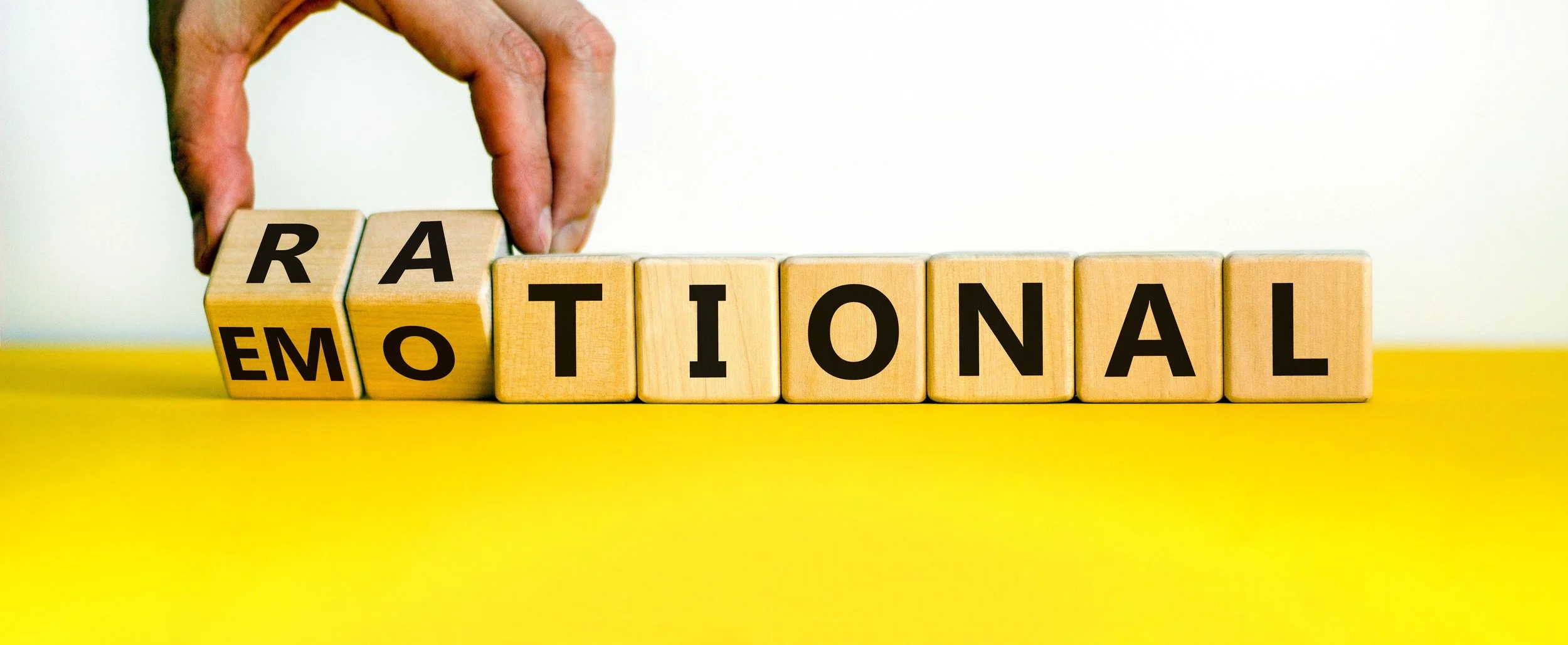
Getting the Balance Right Between Rational and Emotional
INSIGHT - HELEN BLAKE
In Vanishing Value Propositions, we highlighted a growing B2B problem: companies over-engineering processes to reduce risk—only to become difficult to do business with.
The irony? B2B relationships are built on trust, not just process.
Customers invest heavily in their partners. They expect companies to deliver on their promises. As Frances X. Frei and Anne Morriss outline in the Trust Triangle—Authenticity, Logic and Empathy—trust breaks when any one of these fails. Yet in many B2B environments, empathy is the first casualty of rigid systems.
So how do you maximise customer value and minimise business risk?
At Futurecurve, we focus on two things:
Understand value in full: rational, emotional and socio-political
Embrace the human in the system
Value Is More Than Rational
Most value propositions lean heavily on rational aspects of value - cost, efficiency, performance, etc. Necessary, but not sufficient.
Real value sits across three dimensions:
Rational – the measurable outcomes
Emotional – confidence, trust, belief
Socio-political – personal and organisational dynamics
Miss one, and the overall value proposition weakens.
Beyond the numbers, there’s an unspoken contract: Will you deliver? Can we trust you? Is this taking us somewhere better? What difference are you going to make to me and my business? Clear answers to these questions are what customers are really buying.
B2B Is Really B2P
Complex sales aren’t Business to Business—they’re Business to People.
With multiple stakeholders, the picture gets messy. Different agendas. Different risks. Different definitions of success. Especially in co-created solutions, where buyer and seller shape the outcome together.
You can’t navigate all this with logic and rationality alone. The human element isn’t a “soft” factor—it’s the deciding one.
Rational vs Emotional? False Choice.
This isn’t a trade-off.
Rational explains what and how.
Emotion decides why it matters.
Research in Neuroscience shows the brain’s emotional and rational systems work together, not separately. Every decision is a blend.
No emotion → no urgency, no action
No rationality → no clarity, no confidence
You need both.
The Bottom Line
If B2B organisations want to increase value and reduce risk, the answer isn’t more process. It’s better understanding—of customers as people.
Recognise the emotional. Work with it. Don’t design it out.
Because in the end, business decisions aren’t made by companies.
They’re made by people.
If you want to embrace and include the emotional elements in your value proposition, do get in touch. Exploratory conversations are always interesting and start the process of building trust. Give me a call or drop me an email: helen.blake@futurecurve.com